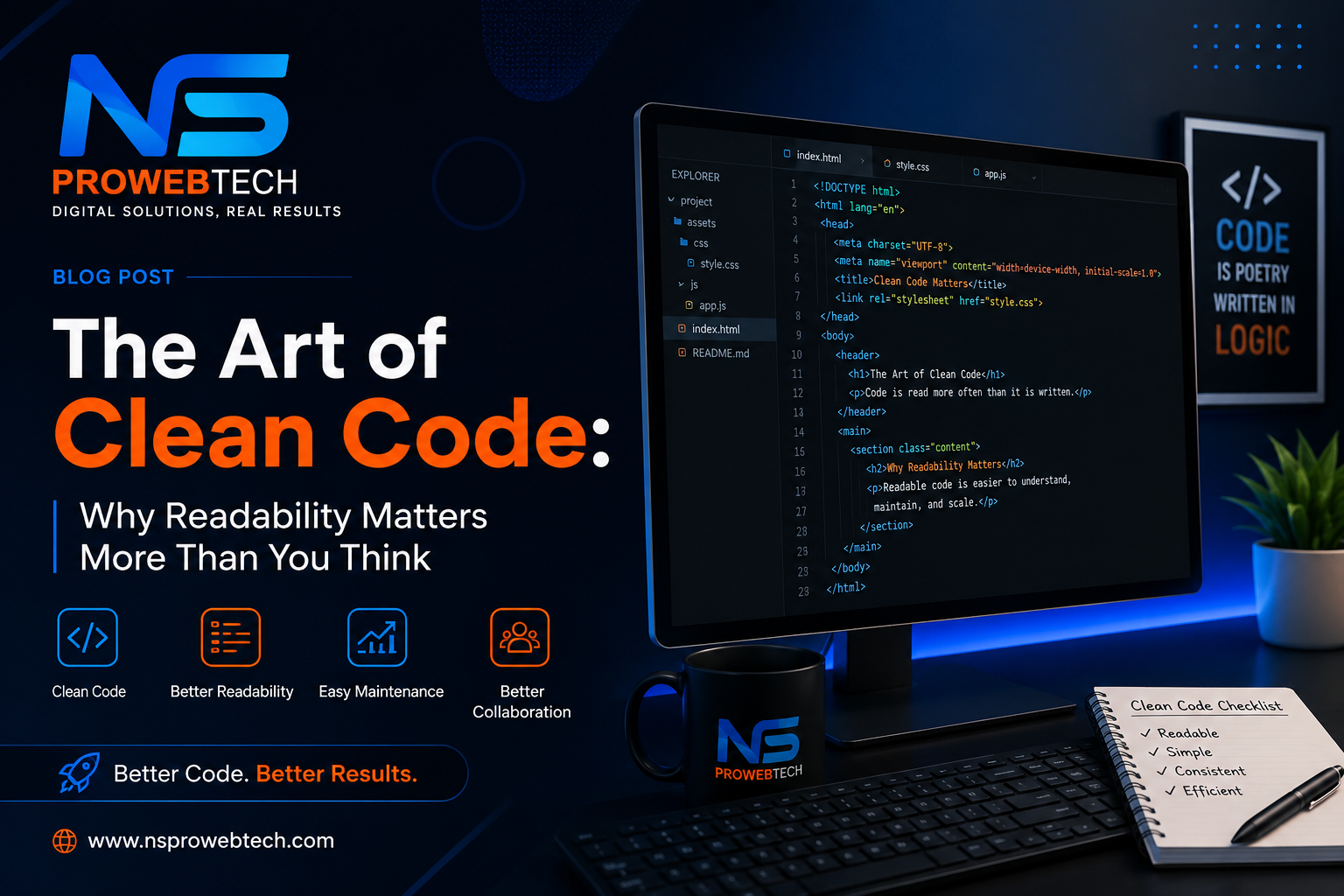
In the fast-paced world of web development, it’s easy to fall into the trap of writing code that just "works." We’ve all been there—copy-pasting a solution from Stack Overflow, quickly patching a bug at 2 AM, or using a complex one-liner because it looks clever.
But if your code isn’t readable, it isn’t truly maintainable. And if it isn’t maintainable, it’s a ticking time bomb for your project.
At NSproWebtech, we believe that writing clean code is a non-negotiable discipline, not just a "nice-to-have" skill. Here is why readability should be your top priority and how you can start implementing it today.
1. Code is Read More Often Than It is Written
A project's lifecycle is surprisingly long. The initial developer might be long gone when the next feature request comes in.
When you write clean code, you are writing documentation for your future self and your teammates. Good variable names (userAge vs ua), consistent indentation, and clear logic paths turn a mystery into a story.
Pro Tip: If you find it hard to explain a block of code to a colleague in plain English, the code is probably too complex. Refactor it.
2. The "5-Minute Rule"
We have a golden rule at our agency: "If it takes more than 5 minutes to understand what a function does, it needs to be rewritten."
Complex functions are a breeding ground for bugs. Break them down into smaller, focused functions. Instead of one massive processData() function, use:
validateInput()
fetchData()
formatOutput()
This modular approach makes testing a breeze and debugging a walk in the park.
3. Consistency is Key (Linters & Formatters)
Human error is real, but you can automate your way to cleaner code. Tools like ESLint (for JavaScript) and Prettier automatically enforce style rules.
We strictly follow the PSR-12 standard for our PHP projects and Airbnb Style Guide for React projects. This ensures that whether you are working on the backend or the frontend, the code looks like it was written by one cohesive entity—not a wild mix of styles.
4. Comment the "Why," Not the "How"
One of the biggest mistakes junior developers make is over-commenting. Code should be self-explanatory.
Bad:
// Increment i by 1
Good:
// Retry logic in case of API timeout
Comments are for explaining the context and the business logic that the code cannot express on its own.
5. The DRY Principle (Don't Repeat Yourself)
If you find yourself copying and pasting a block of code and only changing a few variables, you are violating the DRY principle.
Write a reusable function or class. This reduces the number of places you have to change when a business requirement shifts. It saves time, reduces errors, and keeps the codebase lean.
Final Thoughts
Clean code is a hallmark of a professional team. It shows that we respect our craft, our clients, and our peers. By adhering to these principles, the NSproWebtech Team ensures that we deliver robust, scalable, and understandable solutions that stand the test of time.
What is your biggest pet peeve when reading someone else's code? Let us know in the comments below!